Your home’s equity may be more valuable as a financial buffer than as a renovation budget. If Illinois property taxes are already squeezing your monthly savings, weigh a cash out refinance Illinois homeowners consider against its full cost, not just the cash it could provide.
It’s reasonable to wonder how much you could take out, whether refinancing makes more sense than a second mortgage or HELOC, and how 2026 mortgage rates might affect the numbers. Closing costs and the new loan payment matter too, especially if you’re consolidating higher-interest debt and want to protect your long-term financial stability.
This guide explains how lenders estimate available equity, what common eligibility limits mean for Illinois homeowners, and how to compare a cash-out refinance with other ways to borrow against your home. You’ll also learn what to consider before using the funds for debt repayment or renovations, including how to assess costs and preserve financial flexibility. A clear comparison can help you decide whether refinancing supports your goals or another approach may fit better.
A cash-out refinance replaces your existing mortgage with a new, larger mortgage. The old loan is paid off, and you receive the remaining proceeds in cash, minus closing costs and other amounts due at closing. Your home secures the new loan, so the funds may offer more flexibility than a personal loan, but missed payments put your home at risk.
For a cash out refinance Illinois homeowners are considering, the amount available depends on the home’s appraised value, the mortgage payoff, and the lender’s loan-to-value limits. Property values vary across Illinois and across Chicago neighborhoods, so the appraisal of your specific home, rather than a statewide median, is central to the equity calculation.
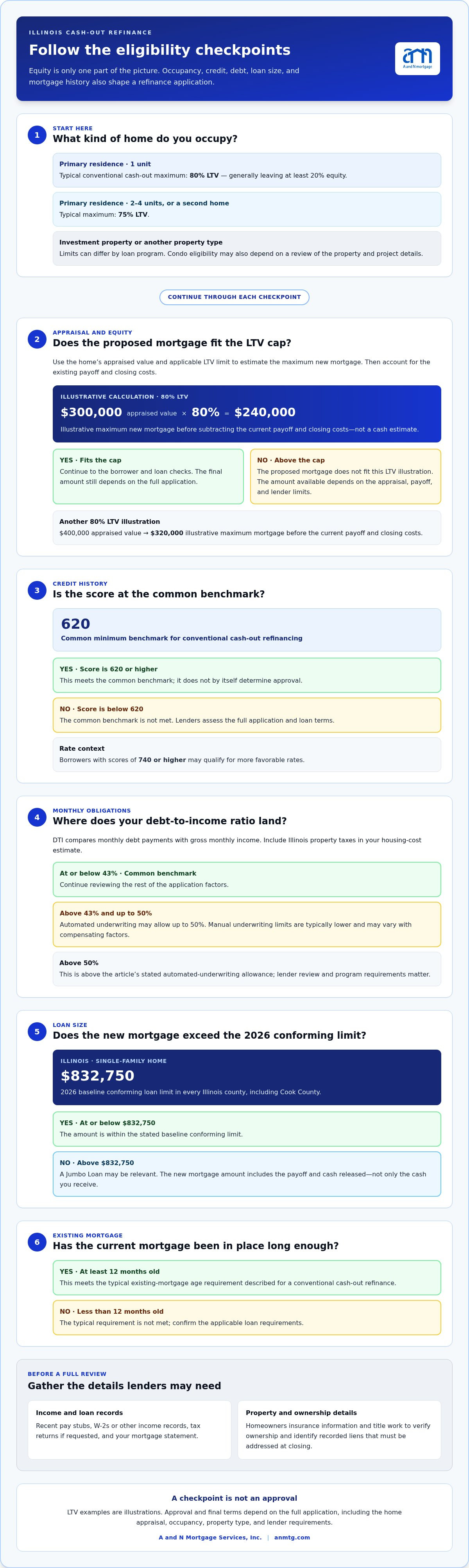
Equity is your home’s current value minus what you owe against it. For example, if an appraisal comes in at $300,000 and the applicable maximum loan-to-value is 80%, the new mortgage could be up to $240,000 before subtracting your existing payoff and closing costs. This is an illustration, not a cash estimate. Approval and final terms depend on the full application.
A rate-and-term refinance changes the interest rate, loan term, or both, without providing cash beyond what’s needed to pay off the existing mortgage and eligible costs. A cash-out refinance borrows more to release some equity. The new mortgage rate matters: Freddie Mac’s October 6, 2026 market data put the 30-year fixed refinance APR at approximately 7.657%. If your current rate is lower, refinancing could increase the cost of your entire mortgage, not just the cash you take out. Homeowners commonly consider cash-out funds for renovations, consolidating higher-interest debt, or other planned expenses. Compare total interest and repayment terms with alternatives before deciding.
Mortgage interest on cash-out funds used to buy, build, or substantially improve the home securing the loan may qualify for a federal tax deduction, subject to IRS rules, limits, and itemization requirements. Using the money for other purposes can change the tax treatment, so speak with a tax professional about your circumstances.
If property taxes are escrowed, the refinance closing figures account for the existing loan payoff and any escrow arrangements on the new mortgage. Review the closing disclosure to see how the old escrow balance and new account are handled. Property taxes remain your responsibility. Down payment assistance in Illinois is designed for eligible homebuyers, while a refinance uses equity built by current homeowners.
Eligibility depends on more than the equity you’ve built. Lenders also assess credit history, monthly obligations, occupancy, property type, and the proposed loan amount. For a cash out refinance Illinois homeowners are exploring, these factors help determine whether an application qualifies and how much equity may be converted to cash.
For a conventional cash-out refinance on a primary, single-unit home, the typical maximum loan-to-value (LTV) is 80%. In practical terms, the new mortgage generally must leave at least 20% of the home’s appraised value as equity. For example, an appraisal of $400,000 would put the illustrative maximum mortgage at $320,000, before accounting for the current mortgage payoff and closing costs. For 2- to 4-unit primary homes and second homes, the typical cap is generally 75%.
A credit score of 620 is a common minimum benchmark for conventional cash-out refinancing, while borrowers with scores of 740 or higher may qualify for more favorable rates. Debt-to-income ratio (DTI) compares monthly debt payments with gross monthly income. A 43% DTI is a common benchmark, though automated underwriting may allow up to 50%; manual underwriting limits are typically lower and may vary with compensating factors. Illinois property taxes count among the housing costs lenders consider, so include them in your budget estimate.
The 2026 baseline conforming loan limit is $832,750 for a single-family home in every Illinois county, including Cook County. Illinois has no higher-cost counties with a separate conforming limit. If the new mortgage amount exceeds that threshold, a Jumbo Loan may be relevant. The amount borrowed includes the payoff and any cash released, not just the funds you receive. A and N Mortgage offers Conventional and Jumbo Loans, with personalized guidance to help homeowners understand how a higher-balance refinance fits their goals.
Loan terms can differ for a single-family home, a Chicago 2- to 4-unit property, a condo, or a home you don’t occupy as your primary residence. The typical LTV caps above illustrate why occupancy and unit count matter; investment-property limits can differ by loan program. Condo eligibility may also involve a review of the property and its project details, so don’t assume a single-family guideline applies.
Gather recent pay stubs, W-2s or other income records, tax returns if requested, your mortgage statement, and homeowners insurance information. Title work helps verify ownership and identify recorded liens that must be addressed at closing. A conventional cash-out refinance also typically requires the existing mortgage to be at least 12 months old.
For another Illinois homeowner resource, review the state’s Illinois Finally Home Program. To discuss mortgage options and how they may fit your circumstances, explore personalized mortgage guidance.
Both options let you borrow against home equity, but they affect your mortgage differently. A cash-out refinance replaces your existing first mortgage with a larger one. A home equity line of credit (HELOC) is usually a separate loan secured by your home, leaving your current mortgage in place. The right choice depends on how much you need, when you’ll need it, and whether replacing your current mortgage makes financial sense.
Compare the total cost, not just the advertised rate. A refinance involves closing costs and may change the interest rate and term on your entire mortgage balance. A HELOC may have its own fees and a variable rate, but you generally pay interest on the amount you draw rather than the full credit line. Review the specific terms and estimate how long you expect to carry the debt.
A cash-out refinance can suit a large, one-time expense, such as a major renovation, or a debt-consolidation plan with a clear repayment strategy. If the new loan is fixed-rate, the principal-and-interest payment is predictable. Consolidating debts into the mortgage may simplify payments, but extending repayment over a longer mortgage term can increase total interest, even if the monthly payment falls.
In 2026, Illinois mortgage rates have remained relatively high compared with the lower-rate environment some homeowners may have secured earlier. A fixed rate offers payment certainty, not a guarantee of lower borrowing costs. Before replacing your mortgage, compare the new rate and closing costs against the rate and remaining term on your existing loan. The effect on the full mortgage balance matters.
A HELOC can be useful for expenses spread over time, such as phased home improvements, or for access to credit you may not need immediately. You draw funds as needed, and your existing first mortgage stays intact. That can be valuable if you have a low-rate mortgage you’d prefer not to replace. The trade-off is that HELOC rates are commonly variable, so payments can rise as rates change.
Use this quick guide to frame the decision:
There’s no universal winner. A and N Mortgage helps homeowners compare cash-out refinance and HELOC options side by side, including payment structure, rate exposure, closing costs, and repayment plans. For a cash out refinance Illinois borrowers should assess the full loan, not just the cash received, and choose a structure that supports their needs without straining their long-term budget.
A clear process helps you plan for an appraisal, document review, and closing without losing sight of why you’re refinancing. For a cash out refinance Illinois homeowners typically move through these stages. Timing depends on the loan, property, and completed paperwork.
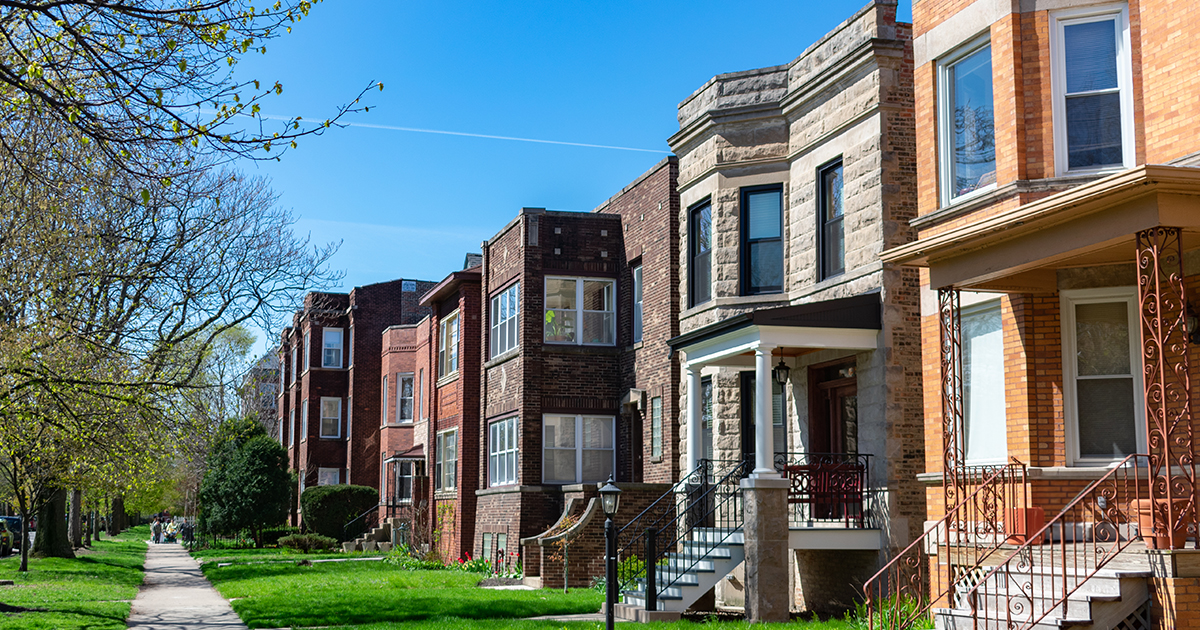
Local context matters. In Chicago, comparable sales are most useful when they reflect similar properties and nearby neighborhoods; a home’s value can’t be reliably inferred from a citywide average. Before the visit, make the property accessible and gather a concise list of completed improvements with dates or records, if available. The appraiser independently determines value, so preparation can clarify the home’s condition but can’t guarantee a higher result.
If the appraisal comes in below expectations, the lender can explain how the value affects the proposed loan amount. Depending on your goals and eligibility, you may consider reducing the cash-out amount, revisiting the application, or pausing to reassess. Don’t make major financial decisions based on an estimated value alone.
At closing, confirm the payoff figures for your current mortgage and any debts being paid from the proceeds. A primary-residence refinance may include a federal right of rescission, which generally gives borrowers three business days after signing to cancel in covered transactions. When that right applies, funds are typically disbursed after the period ends. The lender and closing team can explain the dates that apply to your transaction.
Appraisal scheduling, complete financial documents, underwriting, title work, and closing arrangements all affect timing. Responding promptly to document requests and reviewing closing figures as they arrive can help keep the file moving. A and N Mortgage brings more than 24 years of experience in the Chicago market and provides personalized guidance through each step.
Explore mortgage guidance for your refinance
A cash-out refinance involves more than accessing equity. You’re weighing a new mortgage payment, closing costs, property taxes, and how the funds support your longer-term plans. A and N Mortgage brings more than 24 years of experience in the Chicago market to these decisions, helping homeowners understand their options and the details that can shape a refinance.
Led by President Neena Vlamis, A and N Mortgage has served borrowers since 1998 with a personalized, educational approach to residential lending. Local experience can help make Illinois-specific considerations, such as property taxes and neighborhood appraisal differences, easier to understand as you review your potential payment and available equity. That context can help you evaluate the trade-offs with a clear view of your options.
One loan structure won’t suit every homeowner. Conventional, FHA, and VA programs have different eligibility requirements and terms. Your income, credit profile, home, occupancy, and reason for borrowing all affect which path may fit. A and N Mortgage’s residential loan programs support a conversation tailored to your circumstances rather than a one-size-fits-all answer.
Mortgage decisions can feel complicated, especially when you’re comparing a cash-out refinance with a HELOC or trying to understand how a new rate affects your existing loan. A and N Mortgage helps break those questions into practical steps, explaining the factors behind a potential loan structure and helping you focus on what matters to your household.
A and N Mortgage emphasizes efficient service and educational resources throughout the home-buying and financing process. Personalized guidance can help you focus on the full costs, the payment you can manage, and whether the cash-out amount supports a worthwhile purpose.
To begin evaluating a cash out refinance Illinois homeowners may consider, gather a current mortgage statement, an estimate of your home’s value, and a clear outline of how you’d use the funds. Those details create a useful starting point for an equity analysis and a discussion of available loan options. You don’t need every answer before starting; understanding the numbers is the first step toward a confident decision.
Contact A and N Mortgage about your Illinois cash-out refinance
A cash out refinance Illinois homeowners are considering should begin with a clear purpose and a careful look at the costs. Your available equity depends on your home’s appraised value and loan limits, while credit, income, and debt help shape eligibility. Comparing a cash-out refinance with a HELOC can clarify whether replacing your current mortgage or keeping it in place better suits your plans.
A and N Mortgage brings more than 24 years of Chicago mortgage experience and offers Conventional, FHA, and VA loans. Personalized guidance can help you understand your options and weigh how a new payment fits your household’s financial priorities.
Start with your goals, then review the numbers and available loan options with A and N Mortgage.
Start Your Reassuring Path to Home Equity with A and N Mortgage
A thoughtful decision today can help you use your home equity with greater confidence and protect your financial stability for the road ahead.
It can be a good fit if the cash supports a clear financial goal and the new mortgage’s full cost works for your budget. Compare its rate, payment, closing costs, and total interest with your current loan and alternatives such as a HELOC. In 2026, elevated mortgage rates make that comparison especially important. A cash out refinance Illinois homeowners consider should strengthen their financial plan, not simply increase available spending money.
For a conventional cash-out refinance on a primary, single-unit home, the typical maximum loan-to-value ratio is 80%, meaning you generally leave at least 20% equity. The new loan must also cover your existing mortgage payoff, so the cash you receive is less than the available equity. For 2- to 4-unit primary homes and second homes, the typical cap is generally 75%. Appraised value and loan eligibility affect the final amount.
Closing costs vary with the loan, property, and transaction details, so there isn’t one reliable amount for every Illinois homeowner. Review the Loan Estimate and final closing disclosure to see the charges for your specific refinance. These costs affect your net proceeds and may be paid at closing or, depending on the loan structure, included in the new balance. Compare total costs against the expected benefit before proceeding.
FHA and VA programs have refinance pathways that may allow eligible homeowners to take cash out, subject to program rules and lender approval. A and N Mortgage offers FHA and VA loans, along with personalized guidance on residential mortgage options. Eligibility depends on factors such as the property, occupancy, existing loan, equity, credit, and income. Review the full terms and compare them with conventional options before choosing a refinance.
The appraisal schedule, completeness of financial documents, underwriting review, title work, and closing arrangements all affect timing. For a Chicago-area homeowner, responding promptly to document requests and reviewing loan disclosures as they arrive can help keep the process moving. A and N Mortgage focuses on efficient service and personalized guidance throughout the refinance process.
Generally, cash received from refinancing is borrowed money, not income, so the proceeds themselves typically aren’t treated as taxable income. Tax treatment can depend on how the funds are used and your circumstances. Mortgage interest may qualify for a federal deduction when funds are used to buy, build, or substantially improve the home securing the loan, subject to IRS requirements. Consult a tax professional about your specific situation.
Generally, you can use cash-out proceeds toward another property, subject to loan terms and lender approval. The refinance still needs to qualify based on the home securing it, your finances, occupancy, and applicable equity limits. If you’re buying another residential property, account for the new mortgage payment and other ownership costs in your budget. A lender can help you assess how the refinance may affect qualification for the next purchase.
Welcome to a better mortgage experience! In just few minutes you can find out what you qualify for and explore multiple loan options and interest rates.
Complete our short and intuitive pre-approval interview to get started.