Could a loan that helps you buy a home today cost more or complicate your plans later? The disadvantages of FHA loans can be easy to overlook when you’re focused on qualifying or making a smaller down payment. Mortgage insurance may add to the cost, while a home’s condition or the applicable loan limit could affect your purchase.
Those tradeoffs don’t automatically make an FHA loan the wrong choice. They do make it important to look beyond the initial payment and consider how the loan fits your budget, the property you want, and your plans for building equity. This guide explains the main drawbacks, when they’re most likely to matter, and how to compare FHA financing with alternatives such as a conventional loan.
You’ll also learn what to consider about mortgage insurance, property requirements, and total borrowing costs. A and N Mortgage takes an educational, personalized approach to comparing loan choices, helping Chicago homebuyers understand the tradeoffs as they plan their purchase.
An FHA loan can make homeownership more accessible for some buyers, but easier qualification doesn’t mean every part of the financing will suit every situation. An FHA loan is a mortgage insured by the Federal Housing Administration, which helps protect the lender if the borrower defaults. That insurance supports the program’s role in expanding access to home financing. For the program basics, see our guide to FHA loans.
The main disadvantages of FHA loans are different kinds of hurdles. Mortgage insurance can add ongoing costs, while property requirements or county loan limits can affect which home you can buy and whether the transaction can proceed as planned. An appraisal may also identify conditions that need attention. These are factors to understand, not automatic reasons to rule out FHA financing.
Consider the tradeoffs in two groups. The first is financing costs, including mortgage insurance premiums that affect the loan’s overall cost. The second is property or purchase constraints, including applicable property standards and loan limits that may narrow the homes or transaction terms that work for you.
For example, a Chicago buyer may find a home that fits their monthly budget but still need to consider whether it meets applicable FHA property standards. Another buyer may find a suitable property, but discover that the current county loan limit affects how much they can borrow. The practical impact depends on your budget, the home you intend to buy, and how long you expect to keep the mortgage. The sections below explain these factors in more detail.
Buyers focused on upfront affordability may weigh the tradeoffs differently from those prioritizing long-term borrowing costs. Someone comparing loan options may care most about the cash needed to purchase, while a buyer planning to stay in a home for many years may pay closer attention to ongoing costs and future flexibility. The right priorities depend on your circumstances.
Loan terms and current program rules shape the costs and conditions that apply, so a general description of FHA financing can’t predict the exact outcome for every borrower. The FHA label alone also doesn’t show whether a loan will cost more than conventional financing. Compare the full terms for your situation rather than relying on a single feature, such as the initial payment or interest rate.
Start by identifying what matters most to you: preserving cash at purchase, finding a home that fits the program, managing ongoing costs, or maintaining flexibility for future plans. With those priorities in mind, you can assess each FHA tradeoff in context and compare financing options more confidently.
Mortgage insurance is one FHA cost to examine beyond the interest rate. FHA mortgage insurance premiums, often called MIP, are associated with an FHA-insured mortgage. They’re different from homeowners insurance, which protects against covered damage to the home and is typically arranged separately. MIP also works differently from private mortgage insurance (PMI) on conventional loans. The Consumer Financial Protection Bureau’s overview of FHA loans explains how the program works and why mortgage insurance is part of the picture.
Depending on current FHA rules and the details of the loan, a borrower may have an upfront premium, an ongoing premium, or both. Don’t assume the premium amount or how long it applies based on a general article or an older quote. Review the current premium structure and duration in the loan information for your specific scenario.
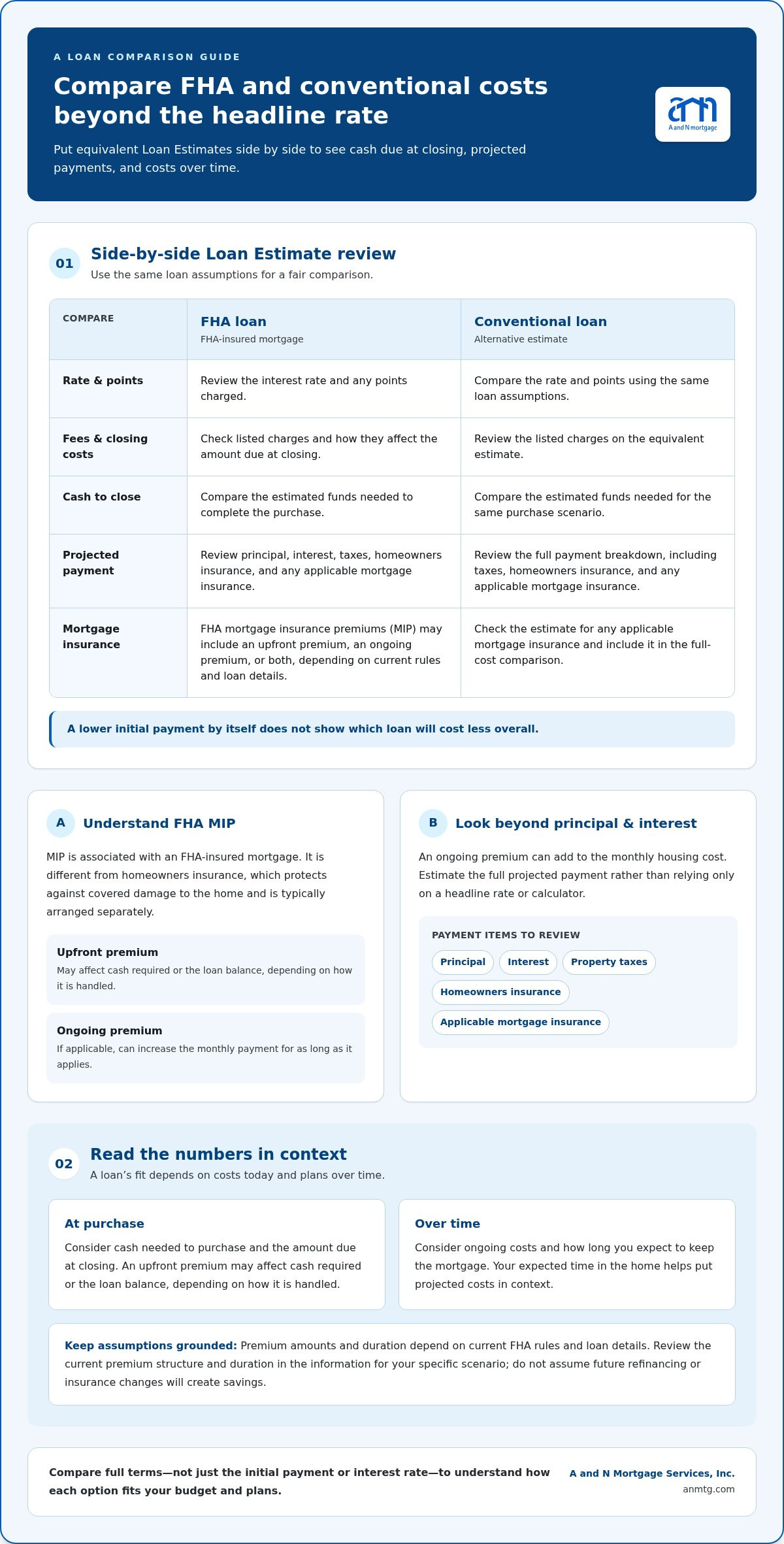
MIP is separate from principal, interest, property taxes, and homeowners insurance. If an ongoing premium applies, it can increase your monthly payment beyond principal and interest. When estimating whether a home fits your budget, focus on the full projected housing payment, not just the mortgage payment shown with a headline rate or calculator.
Upfront and recurring premiums can affect the comparison in different ways. An upfront premium may affect the cash required or the loan balance, depending on how it’s handled. An ongoing premium can shape monthly expenses for as long as it applies. Because the treatment depends on loan terms and current program rules, use personalized figures rather than assumptions.
Put the FHA Loan Estimate beside a conventional Loan Estimate and compare equivalent scenarios (here’s what a Loan Estimate can reveal about a lender). Look beyond the initial payment to understand both the amount due at closing and projected costs over time. A lower initial payment by itself doesn’t mean a loan will cost less overall. The estimate gives you a structured way to review an offer, while your expected time in the home helps put the figures in context.
Keep current costs separate from plans you may or may not pursue later. A possible refinance or future change in mortgage insurance shouldn’t be treated as certain savings when evaluating today’s offer. A side-by-side review makes the tradeoffs easier to see. A and N Mortgage offers FHA and conventional financing and personalized guidance to help Chicago borrowers compare options. Learn more about mortgage options and guidance as you consider what fits your circumstances.
Some disadvantages of FHA loans show up not in the monthly payment, but in the home you’re able to finance. FHA appraisals assess a property’s value and applicable property standards under current program rules. Loan limits can also shape your choices because they depend on location and may change over time. Together, these factors can affect whether a particular home and financing plan fit.
An FHA appraisal considers whether the home meets applicable standards as well as whether its value supports the transaction. If the appraiser identifies a condition that needs attention, the issue may require further review or repairs, which can affect the purchase timeline. That doesn’t mean every repair concern automatically leads to a loan denial. The details matter, and your lender can explain how an appraisal finding affects the financing process.
Keep the appraisal separate from your own home inspection. An appraisal is part of the lender’s evaluation of the property for the loan; it isn’t a substitute for a buyer’s inspection or a comprehensive assessment of the home’s condition. An independent inspection can help you understand the property more fully and identify concerns that may not be the focus of the appraisal (our guide to spotting home issues can help). If you’re considering a home that needs work, clarify which findings relate to FHA requirements and which are part of your own purchase decision.
Property use can matter, too. Before you commit to a purchase, understand how the home’s intended use fits applicable FHA requirements. Reviewing the property and financing conditions early can help you make a more informed offer and reduce surprises as the transaction moves forward.
FHA loan limits vary by location and can change, so use current information for the county where you plan to buy. Chicago buyers should focus on the limit that applies to the specific property, rather than assuming a figure from a previous year or a nearby county applies. The relevant limit can affect how much of the purchase price may be financed through the FHA program.
Consider a buyer whose preferred home requires more financing than the applicable limit allows. Depending on their circumstances, they may need to consider a lower-priced property, contribute more toward the purchase, or compare another loan option, such as conventional financing within the 2026 conforming loan limits. The right path depends on the borrower’s finances and available terms, so treat the limit as one part of the decision, not a complete answer about affordability.
For buyers planning their purchase funds, broader financing resources may help put the pieces in context. Our guide to Illinois down payment assistance programs can support research into assistance programs, while the applicable FHA limit still needs to be evaluated separately. Before settling on a property, compare its condition, intended use, location-specific limit, and financing needs. That preparation helps you see where FHA requirements may narrow your options and where another home or loan structure may better match your plans.
The disadvantages of FHA loans matter most when they conflict with your budget, target property, or plans for the years ahead. A clear comparison can turn a broad concern into a practical decision. Work through the same steps for each loan option, using current figures and the home you actually intend to buy.
Start with the home: does its condition and intended use fit your plans and current FHA requirements? Next, can your budget comfortably handle the complete housing payment, including applicable mortgage insurance and other ongoing expenses? Finally, what other loan options could support the same purchase goals? These questions keep the comparison personal rather than relying on broad claims about which mortgage is best.
An interest rate is only one part of an offer (see the true cost of a low online mortgage rate). Compare each Loan Estimate using consistent assumptions, including the same purchase price, down payment, loan term, and timing where possible. Then review the rate, points, lender fees, other closing costs, estimated cash to close, and projected monthly payment. Include recurring mortgage insurance and housing expenses so the comparison reflects the full financial picture.
Consider both immediate and longer-term implications. One option may require less cash at closing, while another may have a different projected payment or cost structure over time. Neither difference tells the whole story by itself. Check that you’re comparing similar terms, and distinguish figures shown in the estimates from expenses that may vary, such as property taxes or homeowners insurance.
Keep the decision anchored in what’s known today. A potential refinance depends on future circumstances, and assumptions about changing or ending mortgage insurance shouldn’t replace understanding the loan you’re considering now. If you’re weighing FHA against conventional financing, personalized guidance can help you evaluate the options against your budget, property, and priorities.
Explore mortgage guidance with A and N
Understanding the disadvantages of FHA loans is easier when you can see how they relate to your own plans. A and N Mortgage Services, Inc. is a Chicago-based residential lender offering FHA and conventional financing among a broad range of mortgage programs. As a banker, not a broker, A and N Mortgage Services, Inc. emphasizes competitive rates, access to a vast amount of products, and an educational, personalized approach to help buyers weigh loan terms alongside their budget, property plans, and priorities.
A useful comparison starts with your goals, not an assumption that one loan type is right for everyone. A and N Mortgage Services, Inc. can review the home you’re considering, your budget, and your financing priorities, then walk through FHA and alternative options with you. Comparing Loan Estimates makes differences in projected payments, upfront expenses, and terms easier to understand, so you can weigh the tradeoffs in context.
The “banker, not broker” approach of A and N Mortgage gives buyers access to a broad range of mortgage products as they evaluate their financing needs. The company emphasizes competitive rates and a better-informed mortgage experience. The goal is to help you understand how the choices compare, rather than treating a single loan feature as the whole decision.
Before discussing your options, gather a clear picture of your finances. Organize information about income, assets, debts, and the funds you expect to use for a down payment. Having these details ready can make it easier to talk through your budget and identify questions about FHA costs or alternatives.
A and N Mortgage also offers a short, intuitive online pre-approval interview to help you get started, and our 2026 pre-approval checklist shows what to gather. It can help you organize your mortgage information and frame the conversation around your goals. A and N Mortgage Services, Inc. brings over 26 years of experience in the mortgage industry, with guidance focused on helping buyers understand the choices in front of them.
As you review options, bring questions about the parts that matter most to you: how the estimated payment is built, what cash to close may involve, and how the financing fits the property you hope to buy. A Loan Estimate comparison can make costs and terms more concrete, while a personalized conversation can put those figures in context. You can also discuss how FHA financing compares with a conventional loan without assuming either will be the better fit before reviewing your circumstances.
You don’t have to sort through every detail alone. A thoughtful comparison can help you move forward with a clearer understanding of the tradeoffs and the next questions to resolve.
Explore your mortgage options with A and N Mortgage Services, Inc.
Choosing a mortgage isn’t about finding a loan with no tradeoffs. It’s about understanding which tradeoffs you can comfortably manage and which may conflict with the home or financial priorities you have. Keep your decision grounded in details you can evaluate now, rather than assumptions about what you might change later. That approach makes the disadvantages of FHA loans easier to assess without letting a single concern decide for you.
As you take your next step, bring your questions and the options you’ve been considering into a conversation with a mortgage professional. Ask for clear explanations of how each offer aligns with your plans, and take the time you need to understand the comparison. If a detail feels unclear, ask how it affects the full picture. A measured decision is a strong decision, even if it means revisiting your assumptions before moving ahead.
To compare FHA and conventional financing for your Chicago home purchase, connect with A and N Mortgage.
Not necessarily, but it’s a cost to factor into your decision. If you’re focused on keeping the full housing payment manageable, consider how the premium fits alongside principal, interest, taxes, and homeowners insurance. Compare the FHA Loan Estimate with another option for the same purchase scenario. The disadvantages of FHA loans depend on how those costs and terms fit your circumstances, not on insurance alone.
It can affect financing, but an appraisal finding doesn’t automatically mean you can’t buy the home. A condition may need further review or attention before the transaction can proceed as planned. Your mortgage professional can explain what a specific finding means for financing and timing. A separate home inspection can help you assess the home more broadly, including concerns that may not be central to the appraisal.
No. Limits vary by location and may change, so use current information for the area and property you’re considering instead of relying on an old article or a nationwide figure. Compare the applicable limit with the amount you expect to finance after accounting for your down payment. If there’s a gap, you can consider whether a different property, more funds toward the purchase, or another loan option better fits your plans.
Not in every case. The comparison depends on the borrower and loan terms, including mortgage insurance, fees, points, closing costs, and projected payments. For a useful comparison, review Loan Estimates based on the same purchase price and down payment, then consider how long you expect to keep the loan. Don’t decide from the advertised rate alone; a personalized side-by-side review gives you a fuller basis for weighing the options.
Possibly, but the property’s condition and current FHA requirements affect how appraisal findings are handled. Don’t assume either that every repair concern makes the property ineligible or that it will qualify as-is. Review the specific findings with your mortgage professional and arrange a separate inspection to understand the home’s condition and make an informed purchase decision.
No, a possible move isn’t by itself a reason to rule out an FHA loan. Consider how the current costs and terms fit your budget for the time you expect to own the home, while recognizing that plans can change. Don’t count on a future refinance, sale, or mortgage-insurance change to make today’s loan more affordable. Compare available options based on your current circumstances and discuss how your expected timeline affects the choice.
Welcome to a better mortgage experience! In just few minutes you can find out what you qualify for and explore multiple loan options and interest rates.
Complete our short and intuitive pre-approval interview to get started.