There’s no single borrowing limit for financing a home renovation. The amount depends on the loan type, your home’s value and existing mortgage balance, and the project. Program limits are not a guarantee of how much you’ll qualify to borrow.
It’s natural to want a clear number before planning work, but the right financing route also depends on whether you already own the home, are buying, or are refinancing. Start with the amount you need, then consider the project scope and repayment terms.
This guide compares renovation financing options, explains how home equity can affect borrowing, and looks at ways to combine renovation costs with a home purchase or refinance. You’ll get a clearer picture of what may fit your plans and what factors shape the amount available.
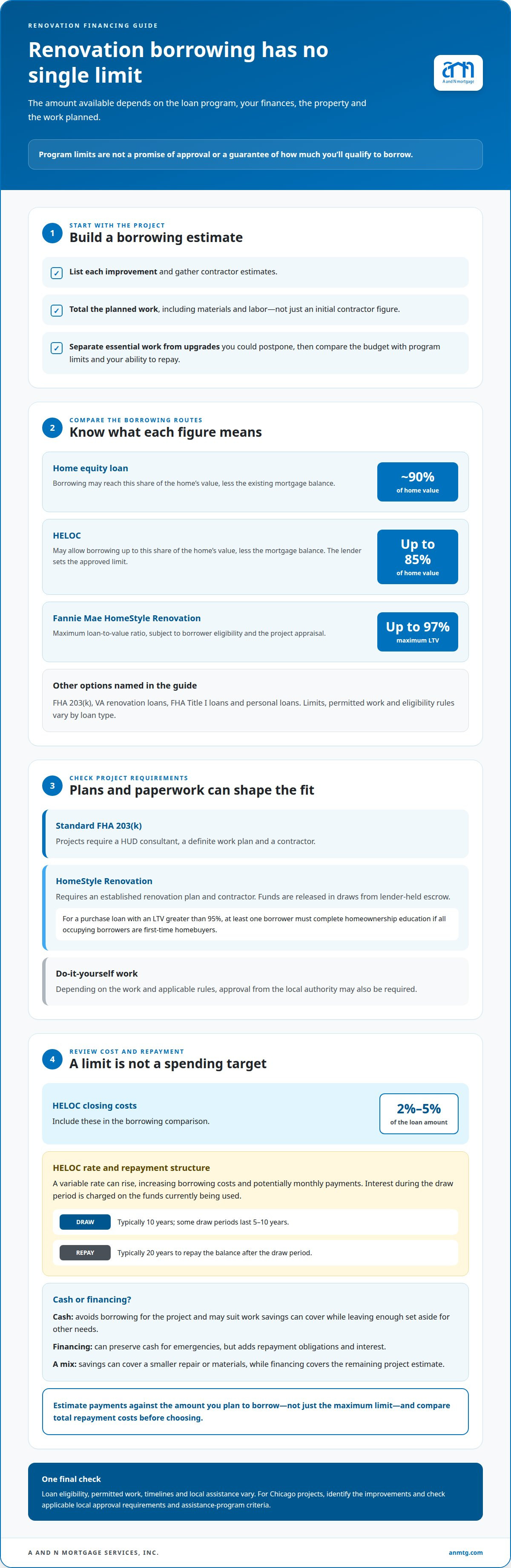
There’s no single borrowing limit for improvements; the amount depends on the loan program, your finances, and the property. A home equity loan may allow combined borrowing of about 80% to 90% of the home’s value, less the mortgage balance. Other ways of financing a home renovation include FHA 203(k), Fannie Mae HomeStyle Renovation, VA renovation, FHA Title I, and personal loans.
Each option has different limits and eligibility rules. According to the U.S. Department of Veterans Affairs, borrowers using a VA home loan for repairs generally pay a funding fee unless exempt. The fee ranges from 1.25% to 3.3%, depending on service status and prior benefit use.
FHA 203(k) and HomeStyle Renovation can combine renovation funding with a mortgage to buy or refinance a home. Standard 203(k) projects require a HUD consultant, a definite work plan, and a contractor.
HomeStyle Renovation requires an established renovation plan and contractor, with funds released in draws from lender-held escrow. Its maximum loan-to-value ratio can reach 97%, subject to borrower eligibility and the project appraisal. For a purchase loan with a ratio greater than 95%, at least one borrower must complete homeownership education if all occupying borrowers are first-time homebuyers.
To estimate the amount you need for financing a home renovation, list each improvement, gather contractor estimates, and total the planned work. Compare that budget with program limits and your ability to repay. Eligibility, permitted work, and timelines vary by loan type. For do-it-yourself improvements, local authority approval may also be required, depending on the work and applicable rules.
Local grants, rebates, and low-cost loans depend on the program and the work involved. Program limits are not a guarantee of eligibility or local availability. For Chicago projects, identify the improvements first, then consider applicable local approval requirements and any assistance program’s criteria.
For homeowners in the United States, paying cash is the thriftiest way to finance home improvements because it avoids borrowing for the project. It can suit a smaller repair or a kitchen remodel when savings cover the full cost while leaving enough set aside for other needs. Financing can preserve cash for emergencies, but it adds repayment obligations and interest.
Start with a written project estimate, then separate essential work from upgrades you can postpone. For example, if a remodel includes a necessary repair and optional finishes, paying cash for the essential work and delaying the finishes can help keep the project within your available savings. Before spending, account for the full estimate, including materials and labor, rather than relying on an initial contractor figure.
Cash-out refinancing is different: it replaces your existing mortgage with a new mortgage and provides some of the home’s equity as cash. Cash-out refinancing may require sufficient equity in the home to qualify. The new mortgage changes the balance being repaid, so compare its terms and monthly payment with your current loan before using the proceeds for improvements.
Refinancing may make sense when the planned work is substantial and the new terms fit your broader mortgage plans. It may be less suitable if replacing your existing mortgage would create terms you don’t want. Compare total repayment costs, not just the cash available for the remodel. A larger project budget doesn’t automatically make a larger mortgage the better choice.
Combining savings and financing can balance immediate spending with borrowing. You might pay cash for materials or a smaller repair, then finance a larger project if using savings would otherwise deplete them. Set a maximum amount to spend from savings and base the financing amount on the remaining project estimate. This approach also clarifies which expenses you’ll pay now and which will add to future monthly obligations.
For U.S. tax purposes, interest on a home equity loan or line of credit may be deductible if you itemize and the funds are used to buy, build, or substantially improve the home that secures the loan. Confirm the details with a tax advisor. Keep records showing how the borrowed money was used, especially when a loan funds both improvements and other expenses. Tax treatment can affect the comparison, but it shouldn’t replace a careful review of the mortgage terms and total repayment costs.
If a cash-out refinance is part of your plan, explore mortgage guidance for refinancing alongside the renovation budget. Compare the mortgage change, available project funds, and monthly repayment before deciding how much of your equity to use.
A home equity line of credit, or HELOC, lets homeowners borrow against available equity as expenses arise. In the United States, a HELOC may allow borrowing up to 85% of the home’s value, less the mortgage balance. The approved limit depends on the lender’s assessment, and the borrower’s income, debts, credit, and property value inform eligibility. Qualifying for a maximum limit doesn’t mean borrowing that full amount is appropriate.
HELOCs typically have a draw period when borrowers can access funds, followed by a repayment period. A borrower typically has 10 years to draw funds, then typically 20 years to repay the balance. Some HELOC draw periods last five to 10 years. During the draw period, interest is charged on the funds currently being used, so a homeowner drawing money in stages may pay interest only on the amount already borrowed.
The variable interest rate is a central trade-off. If the rate rises, the cost of borrowing and potentially the monthly payments can rise too. Before using a HELOC for a renovation, estimate payments against the amount you plan to draw, not just the credit limit. Then consider how payments could fit your budget if the rate changes. Home equity loan and HELOC closing costs typically range from 2% to 5% of the loan amount, so include these costs in the comparison.
A practical way to manage a credit line is to match each draw to a project stage. For example, use one draw for materials and another when labor is due, rather than borrowing the full limit upfront. Track the amounts drawn and remaining project costs. This helps you spot when a scope change could push the project beyond your planned borrowing amount or strain your savings.
Borrowing from a 401(k) is another possible source of renovation funds, but it puts retirement savings at risk. Money borrowed from the account may miss out on compound interest while it is out of the investment balance. If repayment falls outside the plan’s guidelines, the loan may be treated as a withdrawal and incur penalties. Compare that risk with a HELOC’s changing interest rate and payments before selecting an improvement loan.
For either option, qualification depends on the lender’s review and the account or credit line terms. Compare the repayment obligations with your household budget. The best borrowing limit is the amount that supports the defined improvements while keeping payments manageable (our mortgage calculators can help you estimate them), not simply the largest amount available. A written project estimate and staged draw plan can help tie each borrowed dollar to a renovation expense.
If repairs make a home uninhabitable, mortgage payments may continue during construction. A HomeStyle Renovation borrower may finance up to six months of principal, interest, tax, and insurance payments while the property is uninhabitable. FHA 203(k) borrowers may also include up to six months of mortgage payments when renovation work makes the home uninhabitable. These provisions address specified mortgage costs, so don’t assume they cover every expense of living elsewhere.
Combining purchase and renovation costs can help fund repairs before you move in. This structure brings the home and planned work into one loan, while project approval and fund disbursement follow the program’s requirements. Include the project budget and contractor estimates in your planning before closing so the financing reflects the intended work.
To reduce renovation costs, separate essential repairs from optional upgrades before signing a contractor agreement. Get more than one estimate, and don’t assume the cheapest bid is the best fit. Compare the work included, materials, and project scope to make sure the estimates describe comparable plans. If you have the necessary skills and experience, doing some improvements yourself may save money, but consider the time and ability required.
Closing costs and paperwork also affect the amount you need. Renovation loans may have higher closing costs than standard mortgages, so account for those alongside interest, scheduled payments, and service charges. Read the loan and project documents before signing, including the terms for contractor payments and completion. A clear work plan and written estimate can help keep the approved scope aligned with the actual repairs.
The main risks are borrowing more than the project requires, overlooking fees, and underestimating repayment obligations. Before closing, consider the loan’s interest, monthly payments, service charges, and any applicable project deadlines. If the home will be uninhabitable, map out which mortgage payments the program may include and how you’ll cover other living expenses.
Using a credit card for materials can keep those purchases separate from mortgage funding, but it also creates a balance with its own repayment terms. For example, charging fixtures while renovation loan funds cover contractor work may make spending easier to track, but it doesn’t reduce the total project cost. Keep receipts and compare card balances with your renovation budget before making further purchases.
Plan for the period before and after closing. Put mortgage payments, expected contractor draws, and other household costs on one schedule. This can reveal cash-flow gaps while work is underway and help you avoid relying on credit cards for expenses the renovation financing doesn’t cover.
Buying a home that needs work (after a careful inspection) gives you the opportunity to plan the purchase and improvements together. Financing a home renovation as part of the mortgage can bring both costs into one loan, rather than requiring separate borrowing later. The project scope, contractor estimates, and mortgage terms all need to fit the same plan.
Fannie Mae HomeStyle Renovation can fund improvements when buying or refinancing an existing mortgage. For a HomeStyle purchase, renovation costs can be up to 75% of the lesser of the purchase price plus renovation costs or the home’s as-completed appraised value. The appraisal helps establish the limit, while the renovation plan identifies the costs included.
In other words, renovation costs may be included in purchase financing, subject to the program’s loan-to-value calculation and appraisal. HomeStyle renovations must be completed within 12 months from the date the loan closes.
Homeowners may also consider financing a home renovation through a HomeStyle mortgage when refinancing an existing loan. Compare the new mortgage terms with your current loan, including how the renovation amount changes the balance and payments, and whether the result still fits what you can comfortably afford. This may suit someone planning substantial work alongside a mortgage change, provided the project meets program requirements.
FHA 203(k) loans can also combine a purchase and eligible renovation work. Standard 203(k) is for major structural repairs and other qualifying work, while Limited 203(k) covers eligible nonstructural improvements. Both require a defined project plan; standard projects also require a HUD consultant. Program limits and completion timelines vary, so align the work with the loan’s requirements.
Build a comparison that sets out the purchase or refinance amount, planned improvements, and contractor estimates. Then consider the appraised value, loan-to-value calculation, completion timeline, and how renovation funds are released after closing. This helps you see whether combining the costs supports your plans or whether keeping the mortgage and project financing separate offers more flexibility.
Explore renovation financing options
A and N Mortgage Services, Inc. can help you consider how planned improvements fit into your broader home financing decision. If you’re buying or refinancing, or reviewing borrowing options, the team provides personalized guidance to help you understand mortgage paths that may suit your situation in Chicago.
Available options include Conventional Loans (see the 2026 conforming loan limits), Jumbo Loans, and Reverse Mortgages. The right conversation depends on your property plans, financing needs, and how renovation costs fit your overall budget.
Contact A and N Mortgage Services, Inc.
Before moving forward, turn your renovation ideas into a clear plan: define the work, decide what matters most, and consider how borrowing fits your wider homeownership goals. That groundwork can help you compare financing a home renovation with the costs and commitments you’re comfortable taking on.
A and N Mortgage Services can help connect your home plans with mortgage options, including Conventional, Jumbo, and FHA Loans. If you’re weighing a purchase, refinance, or renovation-related borrowing in Chicago, personalized guidance can help you understand which financing path aligns with your goals and circumstances.
Bring your project priorities and financing questions to the conversation. A thoughtful next step can make the decision feel more manageable and help you move forward with clarity.
Talk with A and N Mortgage Services
Your renovation plans can take shape one informed decision at a time.
There isn’t one borrowing limit across renovation loan types. The amount available also depends on program rules, project details, and borrower eligibility.
A typical credit score range for home improvement loans is 580 to 700 or higher. The score needed for a particular loan depends on its program and underwriting criteria, so credit score alone doesn’t establish eligibility. Lenders also assess factors such as income, existing debt, and the requested amount. For a more useful estimate, consider your overall finances alongside the project budget and repayment plan.
A construction loan finances building work, with funds generally released in stages as the project progresses rather than as one unrestricted payment. The borrower presents a project plan and cost estimates for review, and the lender oversees fund disbursement. For example, a build might receive draws as agreed work milestones are completed. Repayment terms and the transition after construction depend on the loan structure.
Yes. HomeStyle Renovation requires an established renovation plan and a contractor, who is reviewed by the lender. Renovation funds are held in a lender-controlled escrow account and paid in draws as work proceeds. The project plan and contractor arrangements are part of the loan process, so include the intended work and contractor costs in your project budget.
For a smaller project, compare available savings, a personal loan, and an FHA Title I Property Improvement Loan. For Chicago improvements, local authority approval may depend on the work involved. Match the borrowing amount to the project and the payments to your budget.
A personal loan for improvements typically doesn’t require collateral, while a home equity loan borrows against the value built up in your home. Personal loans can provide funding quickly but often carry high interest rates and add monthly payments. Home equity loans use the property as security, so compare the repayment terms and consider how borrowing against your home fits your plans.
Cash can suit a smaller repair when paying upfront won’t leave your household short of funds for other needs. For example, you might use savings for a straightforward repair and reserve borrowing for a larger project. Paying cash avoids taking on a loan for the work. Before committing, total the project expenses and decide how much savings you can use without disrupting other financial priorities.
A home equity loan borrows against home equity, while a HELOC lets you draw funds over time and has a variable interest rate. Cash-out refinancing replaces the existing mortgage and, for most loan types, requires keeping at least 20% equity in the home. A personal loan generally doesn’t require collateral. Compare how each option affects your mortgage, access to funds, interest, and repayment obligations.
Welcome to a better mortgage experience! In just few minutes you can find out what you qualify for and explore multiple loan options and interest rates.
Complete our short and intuitive pre-approval interview to get started.