There isn’t one right order for every move. Sell first if avoiding overlapping mortgage payments is your priority, or buy first if you can manage both homes’ costs while your current home is for sale. To decide how to buy a house before selling, weigh whether you can qualify for the new mortgage, cover two sets of housing expenses, and manage a sale that takes longer than expected.
It’s understandable to want your next home secured before letting go of your current one. But buying first can mean carrying two mortgages, while selling first may leave you needing temporary housing or a carefully timed closing. The best sequence is the one your finances and moving plans can support, not simply the one that feels fastest.
This guide explains how to choose which transaction comes first, compare financing approaches, budget for overlapping payments, and manage the gap between closing dates. You’ll also learn how contingencies and moving arrangements can ease timing pressure, giving you a clearer plan for your next decision.
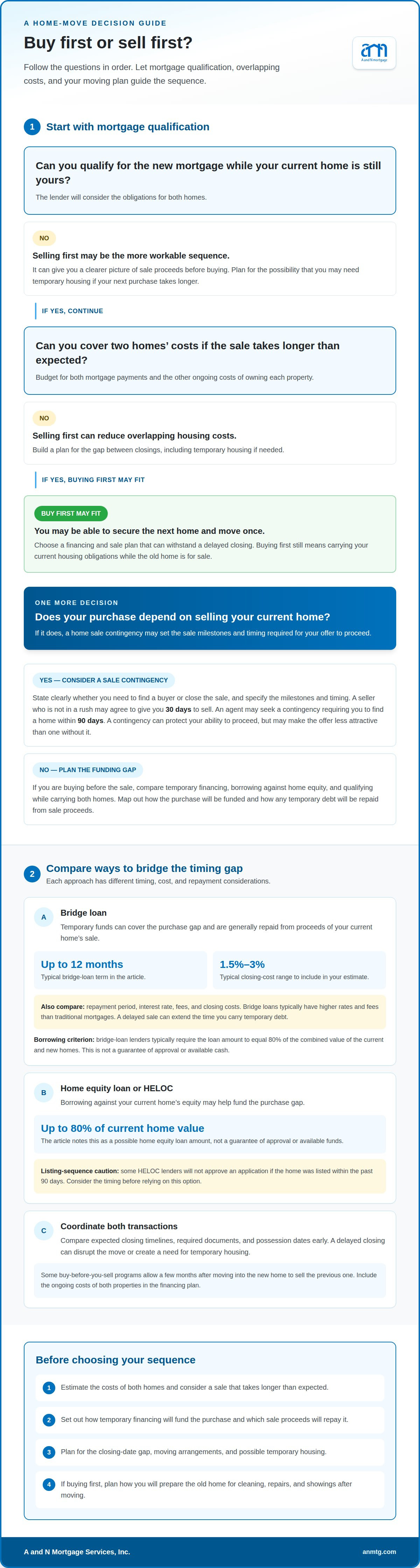
To buy before selling, you can use a bridge loan, borrow against your current home’s equity, or qualify for financing while carrying both homes. A bridge loan provides temporary funds for the purchase and is generally repaid from the proceeds of your existing home’s sale.
Compare the bridge loan’s repayment period, interest rate, fees, and closing costs before using it. Bridge loans typically have terms of up to 12 months and higher interest rates and fees than traditional mortgages. Closing costs typically range from 1.5% to 3%, so include them when estimating the funds needed to close.
Use bridge financing to cover the gap between buying your next home and receiving proceeds from your current home’s sale. First, map out how the bridge loan will fund the purchase, then identify which sale proceeds will repay it. Don’t rely on an immediate sale: a delayed closing can extend the time you carry temporary debt.
Estimate the amount you may need to borrow against both properties. Bridge-loan lenders typically cap total borrowing at about 80% of the combined value of your current and new homes, counting your existing mortgage. Treat this as a general limit, not a guarantee of approval or available cash. The loan’s purpose and repayment plan still matter.
Build a repayment plan around the sale, not just the purchase closing. A bridge loan is repaid with proceeds from selling your existing home. List the expected proceeds alongside the bridge balance and transaction expenses, then consider how a slower sale could affect your finances. Temporary financing can give you time to move, but a realistic sale timeline is essential.
Estimate usable sale proceeds after considering potential taxes. Homeowners who used a home as their primary residence for at least two of the last five years may qualify for a capital gains exclusion, according to the Internal Revenue Service. The exclusion is up to $250,000 for single filers and up to $500,000 for married couples filing jointly, according to the Internal Revenue Service. These limits apply to eligible profit, not the home’s full sale price.
Often, yes, but a home sale contingency can make your offer less competitive than one without conditions. How well it works depends on local demand, the seller’s own timeline, and how clearly the contingency’s deadlines are written. Your lender will also consider the obligations for both homes when reviewing your mortgage.
Prepare and list your current home before making an offer if you want buyers to see progress toward a sale. A listing can show that you’re taking steps, but it doesn’t guarantee a buyer or closing date. Coordinate pricing, showings, and offer timing so you can respond quickly if a suitable home becomes available.
If you buy before your current home sells, plan how you’ll prepare the old property after moving. Set aside time to remove belongings, clean, and make it accessible for showings. A move-in date that gives you access to both homes can make staging and buyer visits easier to manage.
Include a home sale contingency when your purchase depends on selling your current home. State the required sale milestones and timing in the offer, so the seller can assess the proposed schedule. A seller who isn’t in a rush to move may agree to give you 30 days to sell your current home.
Keep the terms clear: distinguish between needing to find a buyer and needing to close the sale. You may ask for a longer window, such as 60 to 90 days, but that leaves the seller waiting longer. A contingency can protect your ability to proceed, though its conditions may make your offer less attractive than one without them.
Align the purchase and sale dates as early as possible. Compare the expected closing timelines, required documents, and possession dates for both transactions. A seller may accept a coordinated schedule, but one delayed closing can disrupt your move or leave you needing temporary housing.
Ask whether home equity can fund the purchase gap. A home equity loan, HELOC, or cash-out refinance borrows against your current home; lenders typically allow combined borrowing of about 80% to 85% of its value, minus what you still owe. Many lenders won’t open a HELOC on a home that’s listed for sale or was listed recently, so set up equity financing before you list.
Build a fallback plan before submitting an offer. Some buy-before-you-sell programs allow homeowners a few months after moving into the new home to sell the previous one. That time can help with cleaning, repairs, and showings after the move. Include the ongoing costs of both properties in your financing plan, and consider how a contingency or equity loan affects your available cash.
For a purchase plan that depends on qualifying for a mortgage while owning your current home, review home financing options alongside your transaction timeline.
Choose the order by weighing your cash reserves, loan qualification, and moving needs. Buying first can help you secure a suitable home, while selling first can reduce overlapping costs.
Compare both sequences against your finances and preferred move date. Selling first gives you a clearer picture of your sale proceeds before buying, but you may need temporary housing if your next purchase takes longer. Buying first can let you move once, though your lender will assess the new mortgage alongside your current housing obligations. Deciding how to buy a house before selling starts with understanding which trade-off your budget can support.
List the practical advantages and costs of buying before selling. You can move directly into the new home and prepare the old one for sale without living through showings. The trade-off is carrying two properties while the sale is pending. Include utilities, insurance, upkeep, and debt payments, not just mortgage principal and interest. For example, check whether your income can cover those costs without relying on sale proceeds.
Build a timeline from the home search through both closings. Buyers have typically spent around 10 weeks searching for a home in recent years, and a typical U.S. purchase closing takes 30 to 45 days. Your current home’s sale adds another variable, so avoid relying on both transactions closing on a single, fixed date. When planning how to buy a house before selling, leave room for each step to take longer than expected.
Estimate the time your current home may need to sell. Days on market vary widely by neighborhood, price point, and season, so ask your real estate agent for recent figures on homes like yours. Then account for preparation, buyer negotiations, and the time between an accepted offer and closing.
If you buy before listing, map out when the home can be cleaned, staged, photographed, and shown after your move. If you sell first, identify where you’ll stay and store your belongings until the purchase closes. Either plan should include a fallback in case a buyer’s or seller’s timeline changes.
Review the financing impact with your lender before committing to a sequence. Ask how carrying your current mortgage affects the amount you can borrow and whether expected sale proceeds are part of your purchase plan. Keep your income, existing debts, and cash available for closing in one clear picture, rather than assuming future proceeds are already usable.
Protect your borrowing capacity while your home search is active. Avoid new credit card balances or major purchases, since additional debt can affect a lender’s assessment (see how mortgage applications and new credit affect your score). Credit card borrowing may also carry higher interest, adding costs while you manage two transactions. Base your purchase budget on funds you can access, not solely on an anticipated sale.
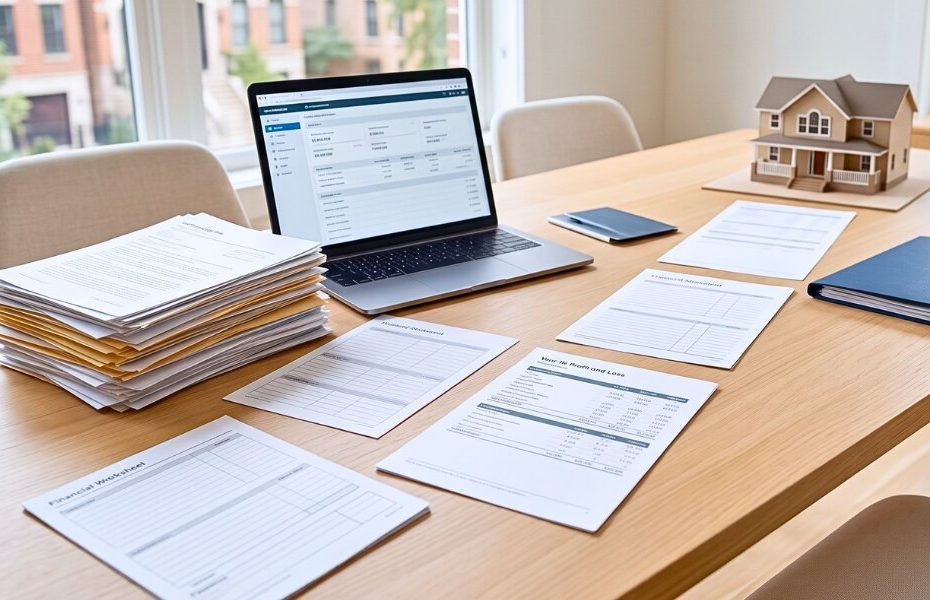
Build a cash-flow plan that covers both homes until your current home sells. Include mortgage payments, ownership expenses, and purchase funds before deciding what you can comfortably carry.
Write down the full monthly cost of each home. Include each mortgage payment, property taxes, insurance, utilities, and routine upkeep. For example, a vacant home still needs basic maintenance and utilities while it’s listed. Separating the costs by property helps you see the combined commitment instead of focusing only on the new mortgage.
Test the budget against your take-home income, not hoped-for sale proceeds. Add recurring expenses such as food, transportation, childcare, and existing debt payments. Then subtract both homes’ costs to see what remains for everyday spending. Base the calculation on income you already receive, since your current home’s proceeds aren’t available until its sale closes.
Ask your lender how both housing obligations affect mortgage qualification, and gather the documents on our pre-approval checklist. The lender considers your existing debt and income alongside the new loan request. Share your current mortgage payment and other recurring debts, including credit card balances. This helps establish a realistic purchase budget before you sign a contract or rely on the home sale to clear obligations.
Separate the cash needed at closing from money reserved for ongoing costs. List the new home’s down payment and closing funds, then keep a separate cushion for expenses on both properties. Avoid using every accessible dollar for the purchase. A sale may take longer than you expect, so your budget needs room for payments while the old home remains unsold.
Model a slower sale as a practical stress test. Use your planned budget and ask what changes if your current home stays on the market beyond your target date. Identify flexible spending you could reduce, and note expenses that can’t pause, such as mortgage payments and insurance. This scenario shows whether your plan depends on a fast closing.
Plan how you’ll use the proceeds when the sale closes. Start with the expected funds, then account for outstanding mortgage debt and transaction expenses before assigning money to goals. For example, decide which proceeds will repay temporary borrowing and which will replenish savings. Keep those priorities clear in your contract and financing plan, rather than treating the full sale amount as available cash.
If your current home sells slowly or for less than expected, you may need to cover its costs for longer and have less sale money available. Plan for both outcomes before closing, and avoid making your next purchase depend on proceeds that haven’t arrived.
Map the dates that connect your purchase, sale, and move. A typical U.S. purchase closing takes 30 to 45 days. On the sale side, you may be able to negotiate a short rent-back that lets you stay in your current home after its closing. Use those periods to coordinate possession, moving arrangements, and access for preparing your current home.
Make a calendar with each contract deadline, closing, and move date. Include time for packing and transferring utilities. Sellers can face a gap between handing over one property and taking possession of another, so identify where you’ll stay if those dates don’t align.
Build an emergency reserve around the expenses that continue during a delay. Include both mortgage payments, utilities, insurance, property upkeep, and essential household costs. Keep this reserve separate from the funds needed to close on the new home. That separation helps prevent moving costs or a late sale from consuming money earmarked for immediate obligations.
Plan for a longer home search or sale rather than assuming both will happen quickly. Both the search for your next home and the sale of your current one depend on the property and market conditions. Leave room in your real estate timeline for preparation, buyer negotiations, and closing coordination.
If you prefer not to move twice, arrange a move-out plan that gives you time to clean and prepare the old home after your new purchase. If you’re thinking of keeping the old home instead of selling, review second home mortgage requirements. If staying is more important, coordinate possession dates and temporary housing before signing contracts. Either choice should fit the funds you can access without relying on a sale closing exactly on schedule.
Stress-test your budget against a lower sale result. Estimate the proceeds after paying off your current mortgage and accounting for selling expenses, then compare the remainder with the funds needed for your next home. If the amount falls short, identify which available funds can cover the difference and which expenses you can reduce without disrupting essential payments.
Protect your credit and borrowing capacity while managing the gap. Avoid new debt that could add payments or affect a lender’s review. If interest rates or carrying costs change your budget, revisit discretionary spending first and preserve funds for mortgage payments, insurance, utilities, and necessary repairs. A clear priority list helps you navigate delays without treating expected sale proceeds as cash already in hand.
Discuss your home purchase financing
A and N Mortgage Services, Inc. can help you assess mortgage financing while planning the purchase and sale of your homes. Bring your expected sale timeline, current housing obligations, income, and estimated funds for the next purchase to the conversation. This gives the loan discussion practical context: whether you may qualify while carrying your current home, and how a Conventional Loan or Jumbo Loan could fit your purchase plans. The right sequence depends on how financing, sale proceeds, and timing work together, so weigh these factors before making an offer. Contact A and N Mortgage Services, Inc. to discuss your home-buying plans and financing options.
A thoughtful plan for how to buy a house before selling starts with a decision you can explain clearly: what funds will support the purchase, what happens if the sale takes longer, and how the move fits your household’s needs. Write down those priorities before committing to a purchase timeline. You’ll have a practical framework for discussing your borrowing capacity and choosing the next step, rather than making a high-stakes decision under pressure.
A and N Mortgage Services, Inc. can help you consider whether a Conventional Loan, Jumbo Loan, or FHA Loan fits your home purchase and broader financing plan. Bring your purchase goals and an outline of your current-home sale so the conversation can focus on how the transactions work together.
Contact A and N Mortgage Services, Inc.
With a plan grounded in your finances and timing, you can move toward your next home with greater clarity.
Yes, you can buy a new home before selling your current one if you qualify for the financing and can manage the overlap. For example, you might use savings for the purchase, borrow against home equity, or arrange temporary financing. The key question is whether your available cash and borrowing capacity can cover the new purchase without relying on sale proceeds that haven’t arrived. Discuss tax or legal consequences with your personal advisors.
Consider financing that lets you close on the new home before your existing property sells. Options can include a bridge loan, a home equity loan, or a HELOC, alongside a new mortgage. Each affects your available funds and debt obligations differently. Before making an offer, organize information about your income, current mortgage, other debts, and expected sale proceeds, then build a plan to repay any temporary borrowing.
A bridge loan provides temporary funds for a purchase before your current home sale, and is repaid from the sale proceeds. Terms typically extend up to 12 months; rates and fees are typically higher than traditional mortgages, and closing costs typically range from 1.5% to 3%. Compare the repayment schedule and total borrowing cost with your expected sale timeline, since delays can leave the temporary debt outstanding longer.
Yes, home equity financing can provide down-payment funds before a sale. Lenders typically allow combined borrowing of about 80% to 85% of the home’s value, minus your existing mortgage balance. Some HELOCs advertise no closing costs but require the line to stay open for a set period, often around three years. Many lenders won’t open a HELOC on a home that’s already listed for sale, so arrange it before listing.
Buy-before-you-sell programs provide a way to purchase and move before selling your previous home; some allow a few months after moving to complete the sale. Costs depend on the program’s financing structure and charges, so assess the full terms rather than focusing only on the initial funds. Compare the sale deadline, repayment requirements, and consequences of missing the timeline with your expected proceeds.
Buying first can let you move directly into a new home, but it requires financing and a budget that support overlapping ownership. Selling first clarifies your available proceeds, though you may need temporary housing. A contingent offer ties the purchase to selling your current home, which can limit timing flexibility for the seller. Choose by prioritizing financial certainty, moving convenience, or offer flexibility.
There’s no single cash amount that fits every move. Add the new home’s required funds at closing, both mortgage payments during the overlap, and moving, utility, insurance, and upkeep costs. Then reserve enough to cover those obligations if the sale closes later than planned. For example, keep moving expenses separate from cash earmarked for mortgage payments, so one unexpected cost doesn’t disrupt another commitment.
Options depend on your state, property, and financial qualifications. In Chicago, A and N Mortgage Services, Inc. provides residential home loans, including Conventional, FHA, VA, and Jumbo Loans. Its mortgage guidance can help you consider how a purchase loan fits alongside your current mortgage and planned sale. Program availability and eligibility vary, so discuss your transaction details and financing needs directly with the lender.
Welcome to a better mortgage experience! In just few minutes you can find out what you qualify for and explore multiple loan options and interest rates.
Complete our short and intuitive pre-approval interview to get started.