A mortgage approval doesn’t automatically mean a home fits your budget. The fear of buying a house is easier to assess when you add up the full cost of ownership, not just the mortgage payment, and make sure those costs leave room for savings and everyday expenses. If the numbers feel tight before you buy, pause and reassess instead of relying on the loan amount alone.
It’s reasonable to worry about taking on a large commitment while your work, family, or financial priorities may change. Looking closely at the costs and trade-offs can help you distinguish manageable uncertainty from a budget that leaves too little breathing room.
This article will help you weigh affordability, possible life changes, mortgage terms, interest rates, monthly payments, and closing costs before deciding. You’ll also learn how to plan for expenses beyond the mortgage and reduce the risk of buyer’s remorse, so you can decide based on what works for your life, not just what a lender may approve.
Buying combines a major financial decision with a home’s personal meaning, so uncertainty can come from both sides. Many buyers, especially first-time buyers, worry that a better option is just around the corner. Those worries can make every listing feel like a choice that must be perfect.
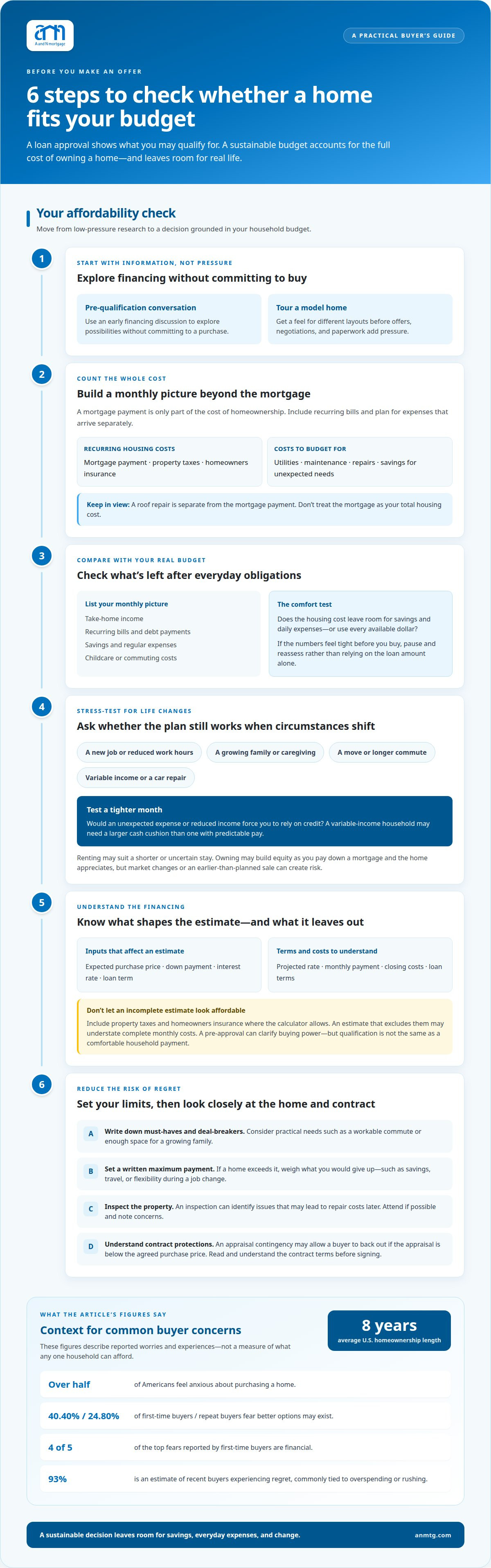
Start with a low-commitment step. A pre-qualification conversation can help you explore financing without committing to a purchase. Touring a model home can also show how different layouts feel, with no decision to buy required. These steps let buyers gather information before offers, negotiations, and legal paperwork add pressure.
Renting and buying can compare differently depending on how long you expect to stay. Renting may suit a shorter or uncertain period, while owning may build equity as you pay down a mortgage and the home appreciates. Buying generally makes more sense the longer you expect to stay, since upfront costs are spread over more years. Your own plans matter more than any average.
Look beyond the mortgage when estimating typical monthly homeownership costs. Property taxes and homeowners insurance add recurring expenses, while utilities, maintenance, and repairs also affect the household budget. A roof repair, for example, arrives separately from the mortgage payment. Set aside savings for unexpected repairs instead of treating the mortgage as your total housing cost.
A volatile housing market can create risk if prices fall after you buy or you need to sell sooner than planned. An appraisal below the agreed purchase price can also complicate financing and leave a gap to address. Price changes affect resale value and equity, so consider whether your budget and plans can withstand a move or market shift.
One contract protection buyers may consider in the U.S. is an appraisal contingency. It may allow a buyer to back out if the appraisal is below the agreed purchase price. Contract terms matter, so understand what a contingency says before signing. A thorough home inspection is another important step: an inspector can identify property issues that may lead to repair costs later.
Buyer’s remorse may follow a rushed choice or a home that misses essential needs, two of the most common first-time buyer mistakes. Before touring, write down must-haves and deal-breakers, such as a workable commute or enough space for a growing family. Attend the inspection if possible and note any concerns. A clear list and a close look at the property can help you weigh appealing features against costly surprises.
Buying can feel risky when your lifestyle may change before the mortgage is paid. A new job, a growing family, caregiving, or a move can shift what feels affordable. For many first-time buyers, the biggest fears are financial. Treat the purchase as a long-term commitment, then test whether the payment leaves room for changes, not just today’s routine.
Affordability calculators, like our mortgage calculators, help estimate a payment, but the result depends on the information entered. Use the expected purchase price, down payment, interest rate, and loan term, then include property taxes and homeowners insurance where the calculator allows. For example, an estimate that excludes taxes and insurance can make a home appear more affordable than its complete monthly costs suggest.
Compare that estimate with your actual monthly budget. List take-home income, recurring bills, debt payments, savings, and regular expenses such as childcare or commuting. Then test a tighter month: would a car repair or reduced work hours force you to rely on credit? A sound plan leaves room for those obligations instead of using every available dollar for housing.
Mortgage affordability also depends on whether income and expenses are likely to remain steady. A buyer with variable earnings may need a larger cash cushion than someone with predictable pay. Qualifying for a loan, however, is different from deciding what payment fits your household comfortably.
Regret often grows when buyers move too quickly or spend beyond their comfort level. Surveys of recent buyers regularly find that many have at least one regret, often tied to overspending or rushing. Slow the decision down with a written maximum payment and a list of trade-offs. If a home exceeds that limit, compare what you would give up, such as savings, travel, or flexibility during a job change.
Think through realistic changes before making an offer. If a child might need another bedroom, or a new role could lengthen your commute, consider whether the home would still work. You don’t need to predict every life event. Instead, identify which changes could strain the budget and how much flexibility your current plan preserves.
Once you have a payment range, a conversation about mortgage options can help clarify how financing choices fit your budget. Bring your estimated payment and monthly expense list, then focus on the terms and costs that could affect your financial stability.
A mortgage estimate becomes useful when you can explain each part of the payment. Before moving forward, understand the loan terms, projected interest rate, monthly payment, and closing costs. These figures work together: the rate affects interest, while the loan term shapes how payments are spread over time. Looking at just one number can hide what the full commitment means for your budget.
There’s no single upfront amount that applies to every U.S. home purchase. The cash needed depends on the down payment, loan terms, closing costs, and any savings you choose to keep available afterward. Ask for an estimate that separates these items, then compare the total needed before closing with the funds you’re comfortable using.
Separate principal and interest from the rest of the housing budget. Principal pays down the borrowed balance, while interest is the cost of borrowing. A fixed-rate mortgage can keep the housing payment predictable and make long-term budgeting easier. Review the projected monthly payment alongside taxes, insurance, and other ownership expenses, rather than treating the loan payment as your entire housing cost.
Loan term matters, too. A longer term spreads repayment over more time, while the rate affects the interest charged on the balance. Compare offers using the same loan amount and term where possible. That makes it easier to see how a rate difference changes the projected payment, rather than comparing figures based on different assumptions.
Preapproval (see our 2026 pre-approval checklist) helps clarify a lender’s estimate of your buying power before you make an offer. It isn’t a commitment to purchase a home or take out a mortgage. A rate lock is an agreement to hold a quoted interest rate for a specified period. Review the lock’s terms and timing against your purchase schedule, because the rate affects the payment estimate.
Closing costs are separate from the down payment, so include both when planning the cash needed at closing. Use the lender’s written estimate to identify each charge and understand how it contributes to the total. If an estimate changes, compare the revised amount with your available funds and monthly budget before proceeding.
Try a practical review before deciding: write down the loan amount, rate, term, projected payment, and estimated closing costs. Then check whether the payment still leaves room for regular bills and savings. If the rate changes, update the payment estimate rather than relying on an older figure. This comparison gives you a clearer basis for deciding whether the financing fits.
Regret can follow when a home looks appealing during a showing but conflicts with daily routines. Picture a buyer who loves a quiet street but faces a difficult commute every workday. Before making an offer, map an ordinary weekday, including travel, errands, and time at home. That practical test can reveal concerns a staged room won’t show.
Plans for how long you might stay also affect how a home feels over time. Many homeowners stay in the same home for a decade or more. Consider whether the property could still work if your household, job, or mobility needs change. A flexible room, for example, might serve as an office now and another purpose later.
Research the neighborhood through several direct steps. Walk the streets at different times, note traffic and noise, and talk with people who live nearby. Review neighborhood crime information, then compare it with what you observe. Online forums and social media pages can surface local concerns, but weigh specific reports against your own visits.
Turn preferences into a decision tool before touring more homes. Separate non-negotiables from features you could change or live without. For example, a buyer might need a manageable commute but accept an older kitchen. When a home misses a priority, write down the trade-off and its daily effect instead of letting attractive finishes dominate the decision.
Contract terms deserve attention before the excitement of an accepted offer takes over. An appraisal contingency may allow a buyer to back out if the appraisal falls below the agreed purchase price. Read the clause closely and understand what it means for your offer. This can help you consider a valuation concern before treating the purchase as settled.
Use a written review after each showing. Record what worked, what raised concerns, and what you still need to learn about the property or area. Compare those notes across homes rather than relying on memory after several tours. If one concern keeps coming up, such as street noise or limited storage, decide whether it is a genuine deal-breaker.
Before submitting an offer, take a deliberate pause and reread your notes. Imagine a regular morning in that home, including the route to work, available storage, and the surrounding street. Then check that the property still matches your priorities and that you can explain its trade-offs clearly. A decision grounded in daily life is more useful than one driven by urgency.
Start with a written monthly budget (the 50/30/20 method is one approach), not the maximum amount a lender may approve. Add take-home income, recurring bills, debt payments, savings contributions, and everyday spending. Then include the estimated mortgage payment and other homeownership costs. If what remains cannot cover normal expenses and continued savings, adjust the target price or wait before committing.
Use actual spending records to make the budget realistic. Review bank and credit card statements, then group expenses such as groceries, transportation, childcare, and subscriptions. For example, a household that regularly pays for parking and commuting should keep those costs in its post-purchase budget. A home’s location can change these expenses, even when the mortgage estimate stays the same.
Next, account for costs that aren’t part of the mortgage payment. Property taxes, homeowners insurance, maintenance, utilities, and repairs can all affect monthly cash flow. Set aside money for unexpected repairs, such as a plumbing problem, instead of assuming every spare dollar can go toward the down payment. That reserve helps protect your budget after moving in.
Check income stability alongside savings. If your earnings vary, build the budget around a lower-income month rather than an unusually strong one. If you expect a change, such as parental leave or a job transition, estimate how it would affect bills and savings. The goal is to see whether the plan works under realistic conditions, not only during a typical month.
Review existing debt before deciding what payment feels manageable. List each required payment and due date, then compare the total with income after housing costs. A car loan, student debt, or credit card balance can affect your credit profile and reduce the room available for repairs and other priorities. A lower purchase budget may preserve flexibility without requiring you to abandon the goal of owning a home.
A mortgage pre-approval can help clarify buying power and reduce surprises as you look at homes. Treat that figure as a financing reference, then compare it with your own monthly budget. If the approved amount would require cutting savings or essential spending, set a lower personal limit. The lender’s estimate and your comfort level answer different questions.
Before moving ahead, run a simple stress test: add a repair expense to your budget, reduce income to a less favorable month, and check whether regular bills remain covered. If the plan depends on perfect conditions, revisit the price range, savings plan, or timing. A clear budget gives you a practical basis for deciding whether buying fits your current finances.
A and N Mortgage Services, Inc. helps homebuyers understand residential financing and explore loan options suited to their situation. If you’ve reviewed your budget but still feel uncertain about how mortgage terms fit your plans, personalized guidance can help you work through financing questions before deciding whether to buy.
Available options include Conventional, Jumbo, FHA, and VA Loans. Each offers a different financing path, so start the conversation with your goals, budget, and the costs you’ve already considered. You don’t need to have every decision settled before discussing how a loan may fit your home purchase.
Contact A and N Mortgage Services, Inc.
The fear of buying a house doesn’t have to set the pace of your decision. Make your next step a focused conversation about the financing questions that still feel unresolved, rather than a commitment to purchase. A clearer view of your options can help you decide whether buying fits your priorities now or whether waiting makes more sense.
A and N Mortgage Services, Inc. can help you explore how Conventional, Jumbo, and FHA Loans relate to your homebuying plans. Bring the questions that matter most to you, such as how to think about loan structure or what to consider before moving forward. The goal is to make your financing choices easier to understand as you decide what works for your circumstances.
Contact A and N Mortgage Services today
Take the decision one thoughtful step at a time. You can move forward with greater clarity, at a pace that feels right for you.
If buying would crowd out essential spending or savings, lower your target budget or postpone the purchase. For example, compare the payment you can manage with what remains for groceries, transportation, and medical needs. A lender’s approval amount doesn’t mean you have to borrow that much. Choose a limit that supports your household priorities, and revisit the decision when your finances or savings change.
Regret is easier to address when you identify its cause. A cosmetic issue, such as dated cabinets, differs from a fundamental mismatch, such as a commute that disrupts daily life. Before making an offer, write down why the home suits your routines and which compromises you accept. If those reasons still make sense after a second visit, you’ll have a clearer basis for deciding.
Plan for plausible changes rather than trying to predict every possibility. If a household member might work remotely, consider whether there’s a quiet workspace. If caregiving could become part of your routine, think about access and layout. A home that can serve more than one purpose gives you options as circumstances shift. Also consider how a move would affect your support network and daily responsibilities.
Common concerns include taking on a large debt, choosing the wrong property, facing expensive repairs, or needing to move sooner than planned. The fear of buying a house can also grow from uncertainty about loan terms or pressure to make a fast offer. Name the specific concern, then identify what information or decision would address it. For example, questions about the loan call for a clear review of its terms.
Set a maximum offer before negotiations begin, and compare the property with similar homes that have sold nearby. Look for differences that affect value, such as condition, layout, and location, rather than relying only on the asking price. An appraisal provides another perspective on value. If the numbers don’t support your limit, be prepared to revise your offer or walk away rather than bid out of urgency.
Arrange a thorough inspection before completing the purchase, and read the report carefully. Ask about unclear findings, such as signs of moisture or a system that needs further review. Gather available information about past repairs and recurring issues, then consider how each concern could affect maintenance plans. An inspection can reveal potential problems, but the report’s specific observations help you decide what needs attention before proceeding.
Selling soon means weighing the home’s current sale price against the mortgage balance and expenses involved in selling. If the proceeds don’t cover the remaining balance and transaction costs, you’ll need a plan for the shortfall. A quick sale can also limit the time available to build equity. Before buying, consider how a shorter stay could affect your finances and whether your plans allow flexibility.
Welcome to a better mortgage experience! In just few minutes you can find out what you qualify for and explore multiple loan options and interest rates.
Complete our short and intuitive pre-approval interview to get started.